Informational article
How to define FAT and SAT criteria before placing an order
In preparation
We build content for technical procurement: from process conditions and solution qualification through delivery scope, acceptance testing, commissioning, and ongoing maintenance. Every technical claim is tied to a configuration, a source, and the conditions under which it applies.
392
portals across 4 categories
2
technical decision paths
12 mo.
indexation monitoring
Business & Industry
Technical or business portal
Publication topic
How to prepare process requirements for a production line inquiry
Portal database
The pool includes 8 business and industrial portals, 62 technology portals, 57 energy portals, and 265 construction portals. We match each portal to the process and the audience: automation topics may require a technology context, utility infrastructure an energy context, and industrial facility equipment a construction context.
8
Economics & industry
62
IT & technology
57
Energy & renewables
265
Construction & garden
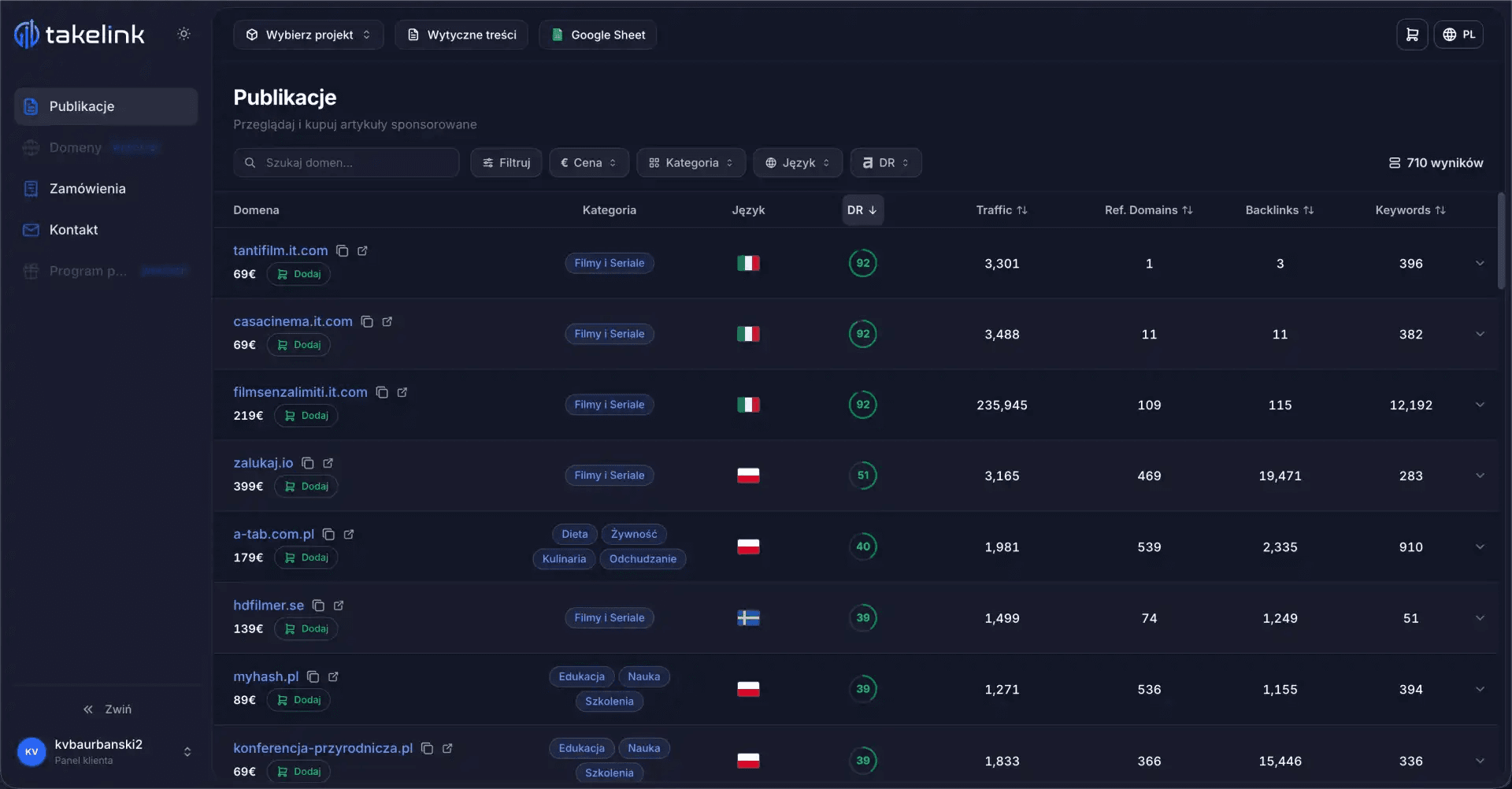
Portal selection criteria
We never select portals based on a single metric alone.
Collaboration paths
Before selecting a vendor, buyers verify fit with the process. After selection, they need unambiguous delivery boundaries, acceptance test protocols, and lifecycle support. Combining both stages in a single generic article buries the dependencies that matter most.
Path 01
Sample topics
Path 02
Sample topics
Packages
The number of publications follows the number of solutions, decision-making personas, project stages, and live landing pages. We do not repackage one specification into articles with swapped titles.
Single Application
A campaign for one process, product family, or integration service with a ready-to-receive landing page.
Lower unit cost
Pricing after portal selection
Procurement & Implementation
Coverage of qualification, delivery scope, acceptance testing, and maintenance for multiple roles in the buying committee.
Lower unit cost
Pricing after portal selection
Portfolio & Markets
A programme for multiple applications, configurations, or markets — for companies with the documentation and pages to support broader coverage.
Lower unit cost
Pricing after portal selection
How it works
Send your brief
Tell us about the site, niche, target market and campaign goal. We'll use that to scope the work.
Site selection & pricing
We match sites to your topic, audience and budget, then send a proposal for your approval.
Content & approval
You can supply a ready article or ask us to write one — either way you sign it off before we publish.
Publication & monitoring
Once approved, we publish and start monitoring indexation.
What's included
Before writing, we sort out configurations, accountability, and sources. After technical sign-off, we publish, report, and monitor indexation.
Send a brief for one client — we'll come back with a portal proposal, role breakdown, and a rough timeline.
Important for this industry
Jak pracujemy
An industrial purchase doesn't start with a vendor shortlist — it starts with boundary conditions. The process engineer defines the material, input and output, required throughput, tolerances, operating environment, utilities, interfaces, and acceptance criteria. Maintenance asks about diagnostics, spare parts, and response times. Procurement focuses on delivery scope, schedule, and total cost of ownership. Every publication must clearly state which role and which stage it was written for.
A number without technical context is easy to misread. Performance, accuracy, energy consumption, load, protection rating, and cycle time are always referenced to a specific model or configuration, unit, operating point, tolerance, and measurement method. A value from one variant's datasheet does not become a property of the entire product family, and a demonstration result is not automatically the output of a customer's production line.
CE marking is not a quality certificate awarded by the EU. Identifying the applicable requirements, performing the conformity assessment, compiling the technical file, and issuing the declaration of conformity — all of this is the responsibility of the manufacturer. We distinguish between a complete machine, an incomplete machine, and a component. When integration is involved, we ask who is responsible for the final assembly. No article confirms conformity based on a marking alone or a photo of the nameplate.
Implementation ends later than equipment delivery. The scope may include engineering, factory acceptance testing (FAT) before shipment, site preparation, installation, site acceptance testing (SAT), training, documentation, spare parts, service, and change management. Content describes each of these phases separately, with the required inputs and clear accountability. We do not promise lead times, availability, energy savings, or ROI without a baseline process, a defined configuration, and an agreed measurement method.

Answers covering parameters, CE marking, incomplete machines, system integration, FAT/SAT, ROI, export markets, and the boundaries of this service.
Manufacturers of machinery and components, automation system integrators, process equipment suppliers, and aftersales service providers. The prerequisites are a defined application, supporting documentation, and a relevant landing page.
Variant-level datasheets, operating conditions, drawings, interface lists, tolerances, test methods, manuals, and declarations — plus a description of the delivery scope, commissioning process, and service model. We also need a technical owner who can approve the final content.
No. CE marking communicates the manufacturer's declared conformity with the applicable requirements. Responsibility lies with the manufacturer. It is not a quality rating, not a guarantee of fitness for every application, and not always the result of third-party certification.
An incomplete machine cannot perform a specific application on its own — it is designed to be incorporated into another assembly. It requires a different set of documents, and the conformity and safety of the final machine must be assessed after integration.
We link FAT to requirements that can be verified before shipment, and SAT to the equipment after installation under plant conditions. Both require a defined scope, input data, samples, tolerances, pass/fail criteria, and a formal protocol.
Yes, provided the client confirms the baseline state, investment scope, CapEx and OpEx, time period, volume, downtime assumptions, waste figures, energy data, service costs, and the measurement method. A scenario result is not a performance guarantee.
Yes. Beyond language, we verify product market approvals, local units, power supply standards, documentation requirements, delivery scope, installation feasibility, service coverage, and the target landing page. Translating a domestic article is not sufficient on its own.
B2B Manufacturing content covers machinery, components, system integration, and production processes. Energy generation and storage goes to our renewable energy vertical, building systems to HVAC, civil works to construction, and software and digital infrastructure to IT.
Every regulatory reference is tagged with its version and scope. As of mid-2026, the transition from the Machinery Directive to EU Regulation 2023/1230 — which applies from 20 January 2027 — is ongoing. We do not mix old and new requirements in the same article.
No. Precise configurations, definitions, and cited sources can make content easier to evaluate and interpret — by search engines, AI systems, and human buyers alike — but they do not guarantee inquiries, positions, AI citations, correct solution selection, or implementation outcomes.
Last updated: July 2026
Next step
Send us the application, configurations, technical datasheets, delivery scope, and product pages. We will map the questions from qualification through to ongoing maintenance.
See also