Informational article
Supplementation and daily nutrition: where to start
In preparation
We provide portals, topics, and content for approval to supplement brands and retailers. We publish across 422 properties covering diet, health, and sport, and monitor indexation for 12 months.
422
diet, health & sport portals
24h
to first publication
12 mo.
indexation monitoring
Diet, Health & Sport
Diet & Active Lifestyle Portal
Publication topic
How to read a supplement label and ingredient list
Portal database
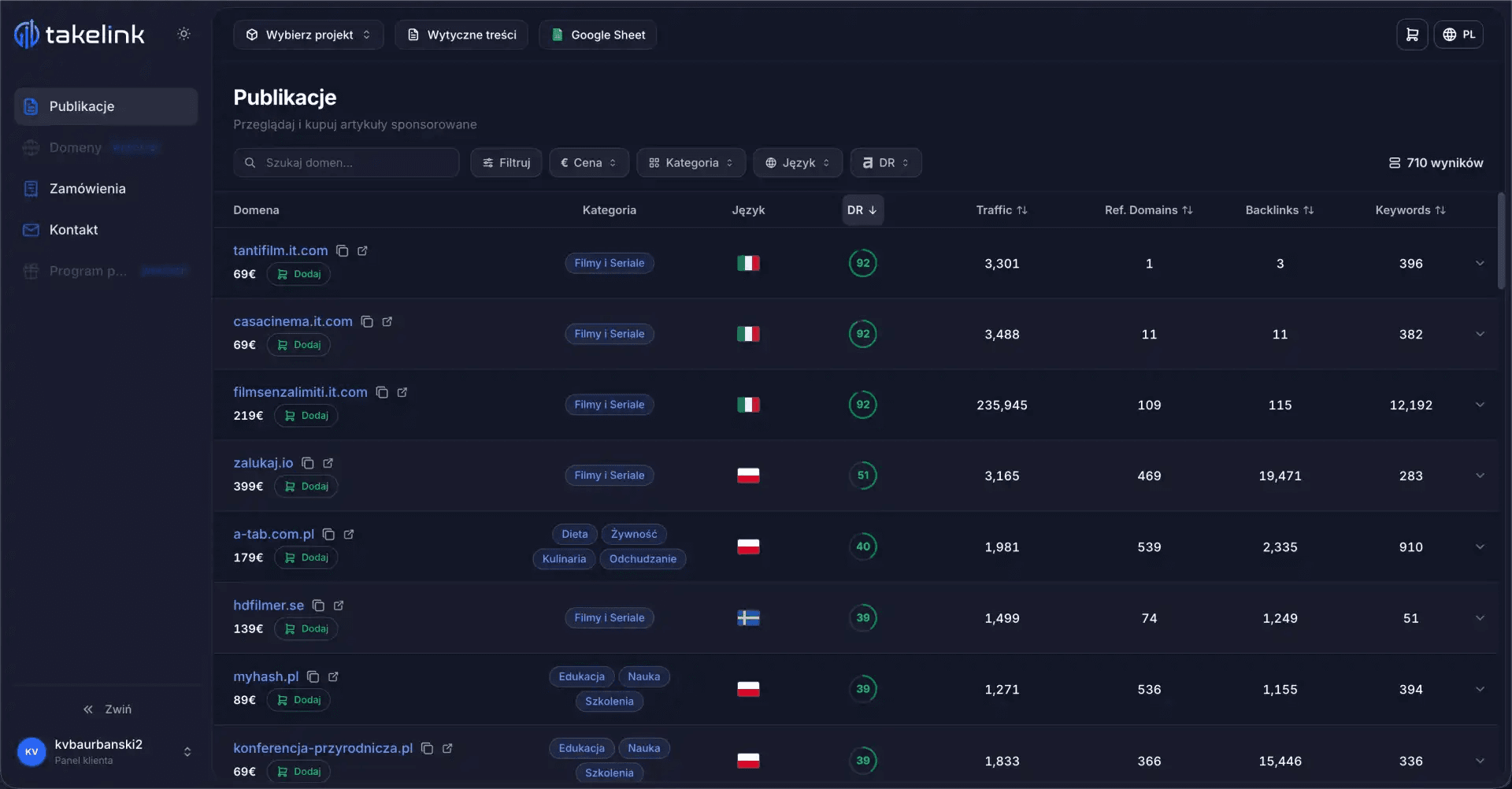
Portal selection depends on the ingredient profile, product format, and intended audience — not on the supplement category alone. A sports portal does not substitute for a nutrition portal when the product is not designed for physically active users.
215
diet & food sites
131
health & medical sites
76
sports & fitness sites
12 mo.
indexation monitoring
Portal selection criteria
We never select portals based on a single metric alone.
Collaboration paths
In both cases the starting point is the label information, but the landing pages, topic grouping logic, and responsibility for product data differ significantly.
Path 01
Sample topics
Path 02
Sample topics
Packages
Scope depends on the number of priority products, target audiences, and editorial contexts. We do not repeat the same topic for different products that share a category but differ in ingredients or target audience.
Category Launch
A focused first run for one category, product, or primary landing page.
Lower unit cost
Pricing after portal selection
Growth
A campaign spanning several products, category pages, or two distinct editorial contexts.
Lower unit cost
Pricing after portal selection
Category Coverage
A plan for an extensive catalogue, multiple products, or several markets.
Lower unit cost
Pricing after portal selection
How it works
Send your brief
Tell us about the site, niche, target market and campaign goal. We'll use that to scope the work.
Site selection & pricing
We match sites to your topic, audience and budget, then send a proposal for your approval.
Content & approval
You can supply a ready article or ask us to write one — either way you sign it off before we publish.
Publication & monitoring
Once approved, we publish and start monitoring indexation.
What's included
Before launch we align on products, landing pages, and permitted messaging. After publication we deliver the live URL and activate indexation monitoring.
Send a brief for one client — we'll come back with a portal proposal, role breakdown, and a rough timeline.
Important for this industry
Jak pracujemy
An article can explain the ingredient profile, product format, label information, and the product's role in a diet — but it must not attribute therapeutic effects or expand claims beyond what is permitted for that specific product and market.
Before we select any portal or topic, we need the ingredient list with quantities, target audience, directions for use, warnings, and the permitted claims with their conditions of use. Without this, we produce generic content that cannot be safely connected to a specific product.
The portal's editorial context must match the product's ingredient profile, format, and intended audience. A nutrition portal does not replace a product page with the full required information, and a sports portal is not appropriate for a supplement aimed at a different demographic.
We do not transfer a claim from one product to an entire category. The client specifies the claim, the product, the target market, and the conditions of use. We then verify that the topic, portal, and landing page are consistent with the materials provided.

Answers about portal selection, content preparation, and publication delivery for supplement brands and retailers.
Scope can cover a product and landing page map, portal proposals, a topic plan, content creation or publication of client-supplied articles, and 12-month indexation monitoring. We agree on scope and pricing before any work begins.
We need the current label or product datasheet, the full ingredient list with quantities, target audience, directions for use, warnings, and the list of claims the client is authorised to use in the target market.
Yes. We can prepare content based on the client's product information, or publish a client-supplied article. In either case, we align on the topic, portal, landing page, and content before publication.
The client confirms which information and claims may be used for a specific product and market. TakeLink edits and publishes the content, but does not replace the brand's own legal or regulatory review.
Yes. Before execution we present a portal proposal matched to the product, audience, language, and budget. Publication begins only after the client confirms scope.
Pricing depends on the portal, the number of pieces, and whether TakeLink prepares the content. The client receives a full scope and cost breakdown before work begins; larger packages typically reduce the per-link cost.
We can deliver the first publication within 24 hours of scope confirmation. The schedule for subsequent articles depends on the total volume, availability of product data, and content approval turnaround.
Monitoring runs for 12 months. If an article does not appear in search index within the first 60 days, or drops from the index within the 12-month period, we move the publication to a comparable portal at no additional charge.
Not automatically. The ingredient, form, dose, study population, duration, and conditions of the research must be compared against the specific finished product. A study on one compound or preparation does not validate the client's formula.
No. A publicly accessible, indexed article may be discovered by search engines and their AI features, but this does not guarantee any specific ranking, brand citation, recommendation, or sales outcome.
Last updated: July 2026
Next step
Send us your products, target market, current priorities, and the permitted claims with their conditions of use. We will prepare a proposal of topics and portals for your review and approval.
See also