Link Building for Education

We build content around two pathways: learning within a program and preparing for external validation or an exam. Every piece of content names the audience, the outcome, the evidence, the author, and the correct program page.

68

education portals

119

IT and family portals

12 mo.

indexation monitoring

Request a free quote

Education and Learning

Education portal

187 portals
OutcomeEvidenceLevel

Publication topic

What does a course completion certificate actually confirm?

Expert articleplatform.com/course/program-and-assessment
Outcomes verified

Portal database

68 education portals and 119 supporting sites

An education portal is the primary channel for program content, methodology, and exam coverage. IT portals are used for tech-focused learning or EdTech tools; family portals are used for parental decision-making and children's programs. We do not route adult courses to parenting sites simply to expand reach.

68

education & learning sites

119

IT & family sites

2

programme paths

12 mo.

indexation monitoring
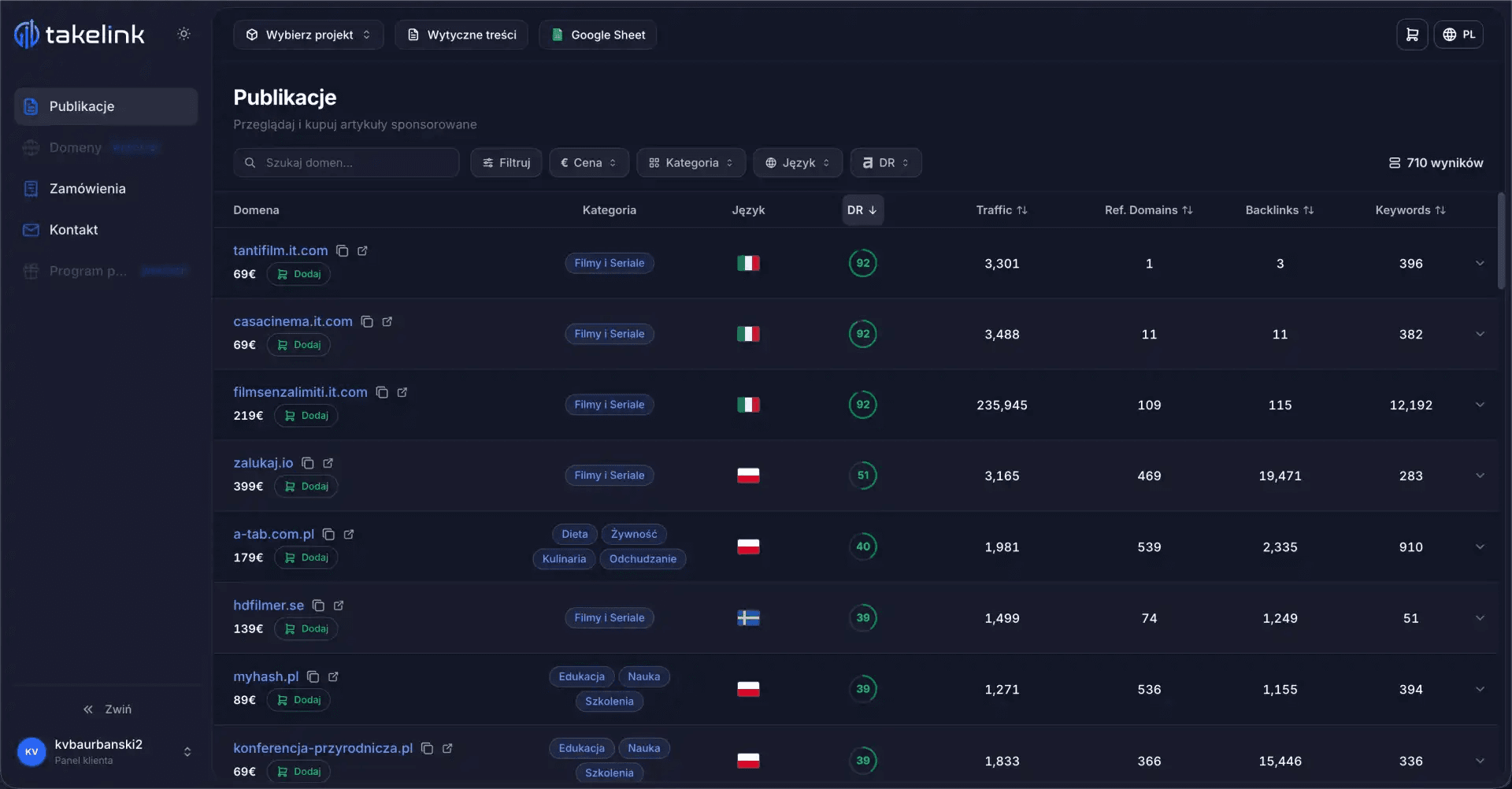
TakeLink platform showing education portal filter for e-learning platforms and course providers

Portal selection criteria

  1. 01

    Outcome and level

    The topic states what the participant will produce, who the program is for, and what prior knowledge or skills are required at entry.

  2. 02

    Activity and assessment

    We check that the stated outcome is supported by practice, a clear criterion, feedback, and evidence — not just material to watch.

  3. 03

    Author and source version

    The program, instructor, exam standard, and any results data are attributed with authorship, date, version, and defined scope of responsibility.

  4. 04

    Document scope

    We distinguish between a letter of participation, an internal certificate, an exam result, and a qualification awarded after validation by an accredited body.

  5. 05

    Audience and portal fit

    After the educational qualification check, we assess whether the portal reaches the intended audience: adult learner, teacher, parent, student, or tech-focused reader.

We never select portals based on a single metric alone.

Collaboration paths

Are you building visibility for learners developing skills, or for candidates preparing for an external exam?

A training program can develop a competency and document progress effectively without awarding a formal qualification. If your product leads to an exam or certification, the content must name the separate examining body, its requirements, and the resulting credential.

Path 01

Program, practice, and feedback

Who it's for
An adult learner, student, or parent choosing a course, language school, children's class, or EdTech tool based on level, format, and how the learning actually works.
What you gain
Who the program is for, what the entry requirements are, what participants will produce, how much independent work is involved, how feedback is delivered, who leads the sessions, how long access lasts, and exactly what the completion document confirms.
Link destination
A specific program page stating the outcome, entry level, syllabus, tasks, workload, format, support, assessment method, instructor profiles, technical requirements, pricing, and terms.
Materials
Outcome and criteria matrix, sample tasks, feedback model, entry diagnostic, contact hours and self-study time, current version of materials, faculty profiles, availability, safeguarding policies for minors, and a template of the final document.
Editorial boundary
Content does not infer competency from video count or attendance. It distinguishes completing an exercise, finishing a program, and validating an outcome — and states plainly what an internal certificate does not confirm.

Sample topics

  • How to compare online courses by assignments and feedback quality
  • What a well-defined program entry level should include
  • What a course completion certificate actually proves — and what it doesn't

Path 02

Exam preparation and formal qualification

Who it's for
A candidate sitting an external exam, enrolling in a vocational qualification course, undergoing validation in a national qualifications framework, or pursuing any process where the outcome is awarded by a body separate from the preparation provider.
What you gain
Which version and format of the exam applies, who administers it, what the outcomes and criteria are, how to register, key dates, accommodations, fees, materials, the validation process, the document issued after passing, and the relationship between the prep course and the certifying institution.
Link destination
A course page naming the exam and version, the scope of preparation, the mapping to official requirements, sample tasks, the provider's role, and a link to current information from the examining authority or national qualifications register.
Materials
Official standard and source, year or version of the exam, the provider's accreditation, scope of preparation, course schedule, sample assessment methods, results described with methodology, terms and conditions, and a clear template of the document issued.
Editorial boundary
Content does not present completing a preparation course as passing the exam. It does not use qualification framework level markers, qualification names, or the role of a certifying institution without a current entry in the relevant register and the provider's confirmed accreditation.

Sample topics

  • Who trains, who validates, and who awards the qualification?
  • Why a vocational course completion certificate is not the same as a vocational qualification
  • How to check the current exam format, requirements, and sitting dates

Packages

How many links do you need?

Scale depends on the number of programs, audiences, levels, and external standards involved. We do not create separate articles when only a module name or cohort label changes.

Single Program and Level

10publications

The first content series for a specific course, school pathway, or educational tool.

  • Outcome and evidence matrix
  • One audience group and program page
  • Report and indexation monitoring

Lower unit cost

Pricing after portal selection

Get a quote
Recommended

Learning and Validation

20publications

Two layers: the skills-development process and the meaning of the assessment, exam, or final document.

  • Separate questions and destination pages
  • Education and supporting portals
  • Authorship and accreditation review

Lower unit cost

Pricing after portal selection

Get a quote

Competency Portfolio

30publications

A plan for multiple programs, levels, age groups, languages, or external standards.

  • Program and audience matrix
  • Exam sources and versions
  • Duplication control across courses

Lower unit cost

Pricing after portal selection

Get a quote

How it works

How we work together

  1. 1

    Send your brief

    Tell us about the site, niche, target market and campaign goal. We'll use that to scope the work.

  2. 2

    Site selection & pricing

    We match sites to your topic, audience and budget, then send a proposal for your approval.

  3. 3

    Content & approval

    You can supply a ready article or ask us to write one — either way you sign it off before we publish.

  4. 4

    Publication & monitoring

    Once approved, we publish and start monitoring indexation.

What's included

What you receive after each publication

Before writing, we organise the offering, outcomes, assessment criteria, and documents. After publication, we deliver a report and monitor indexation.

  • Program, level, and boundary map

    We map courses, schools, exam preparation offerings, and EdTech tools. Recruitment and employer-facing messaging stays on the HR landing page.
  • Outcome–task–evidence matrix

    We connect each key outcome to the participant's activity, the assessment criterion, the feedback mechanism, the verification method, and the document that can confirm it.
  • Sources and accreditation record

    We verify the faculty, the program version, official standards, the relevant examining body, the certifying institution, and the scope of each provider's right to use regulated designations.
  • Content, approval, and indexation monitoring

    We write the content or edit the client's draft. The author confirms subject-matter accuracy; the program owner confirms the stated outcomes. After publication, we monitor indexation for 12 months.

See if we're the right fit

Send a brief for one client — we'll come back with a portal proposal, role breakdown, and a rough timeline.

Get started

Important for this industry

What we will not link without a confirmed outcome, program level, and target page audience

  • We do not place links without a confirmed program outcome and level — education, IT, and family portals serve different audiences and point to different destination pages.
  • We do not select a portal without confirming the intended audience — adult courses, children's programs, and exam preparation each belong on different portals.
  • We do not link a program page that lacks stated outcomes, tasks, and an assessment method — a generic school homepage with no supporting evidence is not a valid destination.
  • We do not publish content about an exam or qualification without a current source from the examining body and confirmed confirmation of the preparation provider's scope of responsibility.

Jak pracujemy

Program type, level, and audience determine the portal — a children's course does not go on an IT portal

68 education portals, 62 IT, and 57 family — program type and audience determine the actual selection

An adult learning course goes to education and IT portals. Children's programs go to family and parenting sites. Exam preparation requires a portal with a formal academic context. No single portal serves all pathways simultaneously.

An education portal and a parenting site point to different destination pages

The destination page is confirmed before any portal is selected: either the adult program page or the children's course page with the parent's role clearly described. Links pointing to a page mismatched with the intended audience are not accepted for publication.

The program page must state the outcome and evidence — a generic school homepage is not a valid destination

Before publication, we confirm the page: learning outcome, entry level, tasks, and assessment method. A page that lacks concrete evidence of participant effort and progress does not meet the criteria for placement on an external portal.

Exam preparation courses are linked separately from skills-development courses

Exam preparation links go to portals with a formal academic context that name the examining body. A competency course with no connection to an external certificate goes to education or industry-specific portals.

Fictional instructional designer mapping learning outcomes, activities, and assessment criteria
Course platformsSchools and training providersEdTech productsChildren's education
FAQ

Frequently Asked Questions

Answers covering learning outcomes, certificates, qualifications, exams, vocational courses, EdTech, children's education, and the boundary with HR.

Schools, course platforms, training companies, language schools, exam preparation providers, EdTech businesses, and children's programs. Each model receives its own outcomes, sources, and audience targeting.

The program, entry level, learning outcomes, tasks, assessment criteria, feedback model, workload, instructor profiles, current version of materials, grading policy, terms and conditions, and a template of the final document.

Not automatically. In formal qualification frameworks, awarding a qualification requires a positive validation outcome and an accredited certifying institution. A course document must be described in line with what it actually assesses and confirms.

Training organises the learning process. Validation checks whether specified outcomes have been achieved. Both can happen within the same institution, or they can be entirely separate — attending training alone does not constitute validation.

No. Completing a vocational qualification course makes a candidate eligible to sit the exam; the vocational qualification certificate itself is issued by the relevant examining authority upon passing.

We state the exam year or version, the scope of alignment to official requirements, the tasks included, and the practice assessment method. For the schedule, official specification, accommodations, and final rules, we direct readers to the official examining authority.

Through methodology: define the cohort, the time period, participant count, completion rate, assessment type, change between measurements, and study limitations. A historical result does not become a promise for the next participant.

Age suitability, required level of independence, the roles of the parent and the instructor, moderation, data handling, technical requirements, accessibility, activities offered, and the limits of automated recommendations.

Education content covers the program, the learning process, assessment, and qualifications. HR content covers recruitment, employers, job roles, and the hiring process. We do not promise employment as an outcome of completing a course.

No. Concrete outcomes, supporting evidence, and authoritative sources can improve how a program is evaluated by users and search engines, but they do not guarantee enrolments, exam passes, search rankings, or inclusion in AI-generated responses.

Last updated: July 2026

Next step

Can you show what participants do and what proves the result?

Send us the program, entry level, outcomes, tasks, assessment method, instructors, final document, and course pages. We will build a topic map grounded in evidence, not marketing slogans.

See also

Related