Link Building for SaaS

We build SaaS communication from problem qualification and plan selection through technical validation, go-live, and adoption. Features, integrations, and supporting evidence are described with scope, version, and date.

62

IT and technology portals

2

SaaS decision paths

12 mo.

indexation monitoring

Request a free quote

IT & New Technologies

Technology buyer portal

62 portals
PlanIntegrationImplementation

Publication topic

How to evaluate a SaaS product before a team pilot?

Buyer's guideproduct.com/use-case
Feature scope confirmed

Portal database

62 IT portals matched to the right buyer, not any tech novelty

We qualify each technology portal by audience and buying process. A product for Finance, HR, developers, or a small business should not receive the same portal set simply because all solutions run in the cloud.

62

IT & technology sites

2

SaaS buying paths

24h

to first publication

12 mo.

indexation monitoring
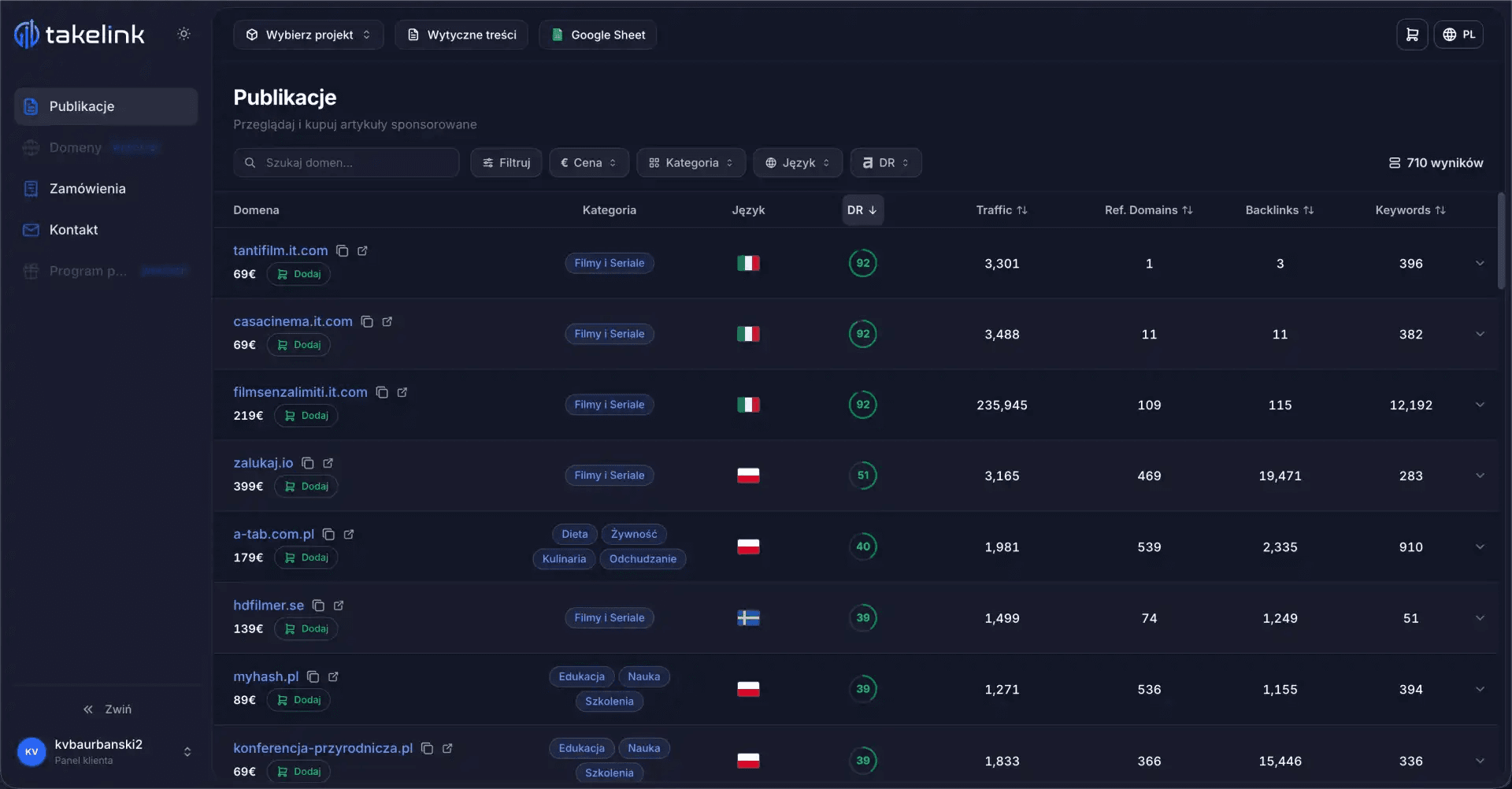
TakeLink platform showing IT & technology portal filter for SaaS

Portal selection criteria

  1. 01

    Category, segment, and role

    The portal and topic match the actual buyer: business stakeholder, administrator, developer, security professional, or end user.

  2. 02

    Feature availability

    Plan, region, version, limits, beta status, add-ons, and required implementation steps are verified against the current product source.

  3. 03

    Evidence and date

    Benchmarks, certificates, audit reports, SLA references, and case studies include scope, period, methodology, and the approving party.

  4. 04

    Next-step landing page

    A use case article links to the use case page, an integration question links to documentation, and a security question links to the current trust center — not always the homepage.

  5. 05

    Market and legal status

    Language, currency, terms, regional availability, and data or AI obligations are confirmed for the specific market and application.

We never select portals based on a single metric alone.

Collaboration paths

Are you building visibility for decision-makers evaluating a use case, or for technical teams validating an integration?

The business champion needs to justify a process change, while the technical and legal teams assess the conditions for executing it. Combining both conversations in a single feature list typically obscures cost and dependencies.

Path 01

Category, use case, and purchasing model

Who it's for
Process owners, team leads, operations, product, finance, or founders who are identifying the category, comparing approaches, and building the business case for a pilot.
What you gain
What problem and outcome are in scope, for which team, what changes in the workflow, which features and limits does the right plan include, how are users or usage counted, which costs scale with growth, and what the product deliberately does not handle.
Link destination
A dedicated use case or segment page showing the workflow, roles, required data, features by plan, limitations, an example outcome, and a clear path to pricing, demo, or pilot.
Materials
ICP and exclusions, before-and-after process maps, feature and plan matrix, billing units, limits, current pricing, outcome definitions, benchmarks with methodology, and sales discovery questions.
Editorial boundary
We do not present roadmap features, beta functionality, or add-ons as standard. Savings and outcomes are stated with a baseline, sample, period, configuration, and dependencies; a customer story does not become a universal benchmark.

Sample topics

  • How to define a use case before choosing a SaaS platform
  • How to compare SaaS plans by limits rather than by names
  • How to build a business case for a SaaS tool pilot

Path 02

Technical validation, implementation, and adoption

Who it's for
IT, Security, Privacy, Legal, the product administrator, and the implementation owner — teams verifying the integration, risk profile, go-live process, and offboarding conditions.
What you gain
How authentication and the account lifecycle work, which APIs and rate limits are available, where data flows, who the sub-processors are, what the locations and transfers look like, what the SLA covers, how incidents are handled, and how export, deletion, migration, acceptance testing, and adoption measurement work.
Link destination
Integration documentation, trust center, security page, or an implementation page with current scope, service status, change history, plan-level conditions, and a contact route to the right team.
Materials
API and rate-limit documentation, data-flow architecture, SSO and provisioning specs, DPA, sub-processor list, regions, retention policies, security pack, SLA, status page, data export process, and onboarding runbook.
Editorial boundary
We do not use "compliant", "secure", or "zero downtime" without scoped evidence. We separate customer and vendor responsibility, mechanism from configuration, and historical uptime from contractual commitment.

Sample topics

  • What to verify before integrating a SaaS product with your identity directory
  • How to read a sub-processor and data region list
  • How to define acceptance criteria and adoption metrics for a SaaS pilot

Packages

How many links do you need?

Scope depends on the number of segments, plans, integrations, markets, and production-ready landing pages. A product roadmap is not automatically a publication plan — we do not write about announced features as if they were already available.

Single Use Case

10publications

A campaign for one segment and process, with a production-ready landing page, an up-to-date plan matrix, and verified product materials.

  • One decision path
  • Features mapped to plan tier
  • Next-step page control

Lower unit cost

Pricing after portal selection

Get a quote
Recommended

Purchase & Implementation

20publications

Coverage of business value, purchasing model, integrations, data, and adoption across multiple decision-making roles.

  • Both SaaS content paths
  • Product and technical sources
  • Topics from pilot through to adoption

Lower unit cost

Pricing after portal selection

Get a quote

Segments & Ecosystem

30publications

A programme spanning multiple use cases, plans, integrations, or markets — for teams that maintain documentation and manage content change approvals.

  • Separate clusters per segment
  • Integrations without duplicating pages
  • Change log maintained throughout the campaign

Lower unit cost

Pricing after portal selection

Get a quote

How it works

How we work together

  1. 1

    Send your brief

    Tell us about the site, niche, target market and campaign goal. We'll use that to scope the work.

  2. 2

    Site selection & pricing

    We match sites to your topic, audience and budget, then send a proposal for your approval.

  3. 3

    Content & approval

    You can supply a ready article or ask us to write one — either way you sign it off before we publish.

  4. 4

    Publication & monitoring

    Once approved, we publish and start monitoring indexation.

What's included

What you receive after each publication

Before any content is written, we organise product sources and define claim boundaries. After publication, we deliver the live URL and activate indexation monitoring.

  • Category, segment, and use case map

    We separate problem, role, plan, and landing page. An IT services product is directed to an IT audience; a finance or HR product goes to the appropriate regulated landing page.
  • Feature and limitation register

    We record availability by plan, version, and region; beta status; limits; add-ons; integration dependencies; and the verification date.
  • Buyer evidence pack

    We compile API documentation, security materials, DPA, sub-processors, SLA, service status, onboarding, data export process, and references — each with the relevant approving stakeholder.
  • Content, approval, and indexation monitoring

    The client reviews the proposed topic and portal before production begins. Finished content goes through the agreed approval process. After publication, we deliver the live URL and monitor indexation for 12 months.

See if we're the right fit

Send a brief for one client — we'll come back with a portal proposal, role breakdown, and a rough timeline.

Get started

Important for this industry

What we do not link when the feature, plan, and landing page are not confirmed

  • We do not describe roadmap features, beta functionality, or higher-tier plan capabilities as standard and available to every user.
  • We do not make blanket statements about GDPR compliance or security without specifying role, scope, system, and document date.
  • We do not declare an integration based on a logo when the connection requires a specific plan, version, or ongoing manual maintenance by the customer.
  • We do not link every topic to the homepage instead of the relevant use case page, documentation, or current trust center.

Jak pracujemy

A SaaS feature is only accurate within a specific plan, version, and configuration

A feature name does not define its scope — plan, version, and region all matter

"Automation", "SSO", or "AI assistant" may only work on a specific plan, role, region, and configuration. In every article we distinguish features available as standard from those in beta, a partner integration, a paid add-on, or work performed manually by an implementation service.

The buying committee evaluates different risks — one article is not enough

The process owner checks outcomes, Finance reviews the billing unit, IT examines integrations, Security reviews controls, and Legal looks at data roles and contract termination terms. Each publication is assigned a role, a stage, and a next document — not a generic list of benefits.

GDPR compliance is an analysis of roles and scope, not a declaration

Customer and vendor must establish the roles of controller and processor, the subject matter of processing, sub-processors, locations, transfers, and deletion conditions. A certificate confirms a defined scope and date — not the safety of every possible configuration.

Product value is created after implementation, not after sign-up

Implementation content defines the process owner, data sources, configuration, migration, acceptance testing, training, and adoption metrics. We do not promise setup in minutes or ROI without baseline data and a defined automation scope.

Fictional SaaS product manager reviewing plans, integrations, data, and pilot criteria
Category & use casePlans & limitsIntegrations & dataImplementation & adoption
FAQ

Frequently Asked Questions

Answers covering use cases, plans, integrations, personal data, security, SLA, AI, pilots, and the difference between SaaS and an IT service.

SaaS sells a repeatable product with defined plans, features, and supported integrations. An IT services firm sells a project, expertise, or managed support. The questions, evidence, pricing model, and landing pages are therefore fundamentally different.

Yes. A business problem article should link to the relevant use case page, an API question to the documentation, and a security question to the current trust center. We choose the page that matches the intent — not always the homepage.

We work from an approved plan matrix, documentation, and the environment specified by the client. We record region, version, limits, add-ons, beta status, and verification date.

Not as a standalone claim without analysis. The roles of controller and processor must be established, along with purpose, instructions, data categories, the processing agreement, sub-processors, transfers, security controls, retention, and the customer's own configuration.

We name the certificate or audit report, the certifying body, the systems or services in scope, the validity period, and whether the evidence is publicly accessible. An organisation-level certificate does not automatically cover every feature, integration, or customer configuration.

We can describe the current contractual commitment — including the measurement period, exclusions, and remedies. We do not convert historical uptime into a future guarantee, and we do not treat a status page as an SLA.

We define the task, the model or provider, input data, how data is used, output, human oversight, failure modes, and the target user group. Legal obligations depend on role and application — we do not assess them based on an AI label alone.

A hypothesis, a user group, data scope, configuration, timeline, acceptance criteria, adoption metrics, an owner, support arrangement, security requirements, and a decision process at the end. Creating an account is not a successful pilot.

Yes, when the criteria are relevant, sources are current, dates are visible, and competing products are described accurately. We do not copy pricing pages or declare a winner based on criteria cherry-picked to favour one product.

No. They can expand the verifiable context around a product, but they do not guarantee indexation, ranking, citation in AI-generated answers, demo requests, activations, or paid conversions.

Last updated: July 2026

Next step

Do you have a defined use case and up-to-date product documentation?

Share your segment, plan, features, integrations, security pack, implementation process, and target landing pages. We will map the questions from qualification through to adoption.

See also

Related