Informational article
How to document a product test in a review?
In preparation
We grow the publisher's own site — not a network of merchant feed copies. Placements link to comparisons and tools that carry a transparent methodology, a date, a disclosed commercial relationship, and a controlled click path.
2000+
owned portals
30
topical categories
12 mo.
indexation monitoring
Category matched to niche
Portal for comparison-intent audience
Publication topic
How to compare offers based on your specific needs?
Portal database
The network covers all 30 categories, including 946 portals with at least 100 monthly sessions according to panel data. For any given domain, the effective selection is narrowed by niche, user profile, decision type, and the current state of the destination page — the full network size is not the campaign's reach.
2000+
topical sites
946 sites with ≥100 visits/mo.
30
topic categories
2
link paths
12 mo.
indexation monitoring
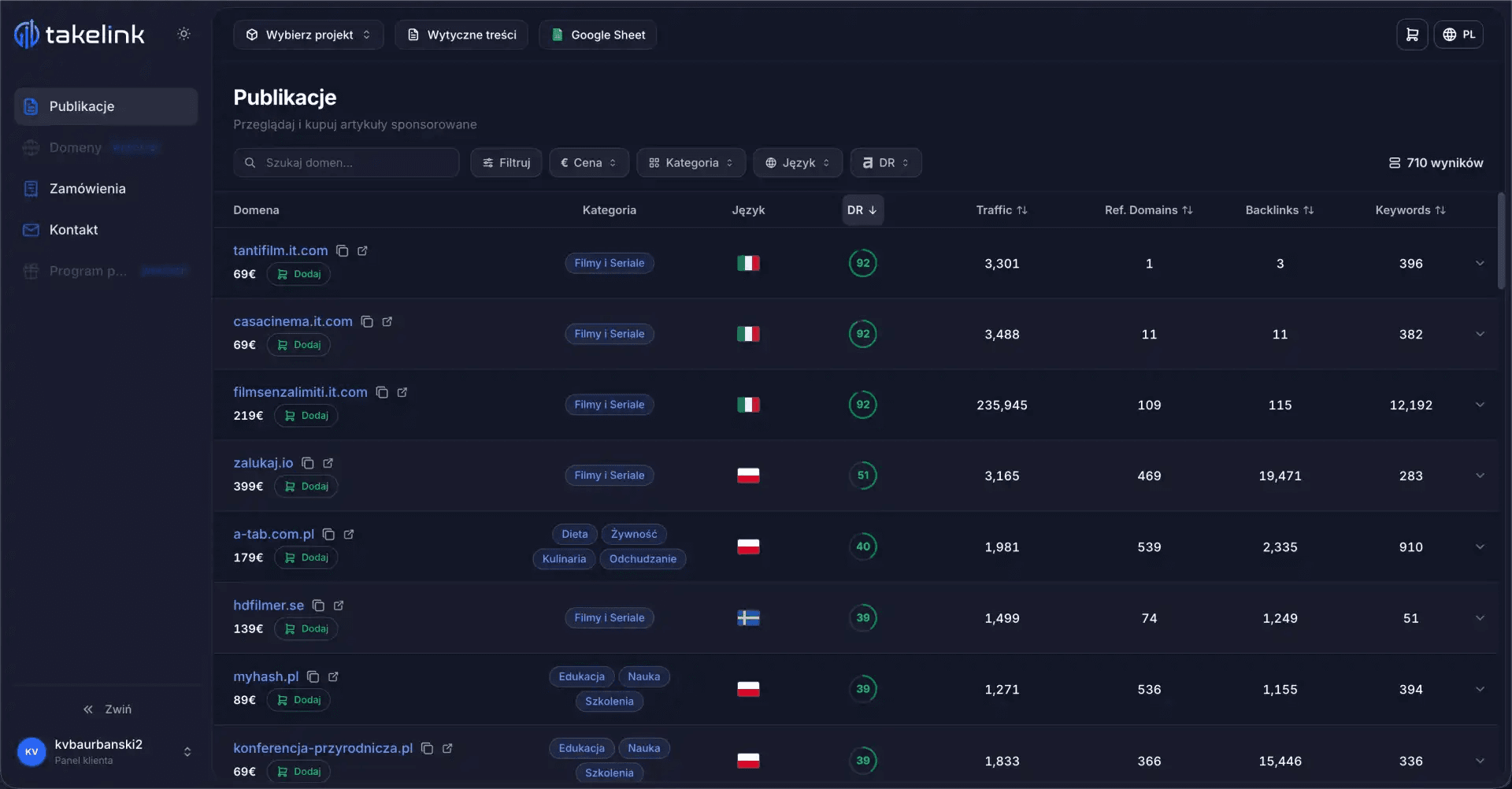
Portal selection criteria
We never select portals based on a single metric alone.
Collaboration paths
Editorial teams own the accuracy of the evaluation; affiliate operations own the functioning of offers and measurement. Commission connects both areas but cannot allow one to mask failures in the other.
Path 01
Sample topics
Path 02
Sample topics
Packages
The scope can support a single methodology, multiple decision types, or separate domains. Each domain retains its own audience profile, source standards, publication history, and update policy.
Single Methodology
A campaign for one content cluster, ranking, or tool with a finalized editorial policy and an update process in place.
Lower unit cost
Pricing after portal selection
Content & Monetization
Scaling comparisons and reviews alongside live offer accuracy and click-path management across multiple topics.
Lower unit cost
Pricing after portal selection
Publisher Portfolio
A program spanning multiple clusters or owned domains, where each domain has a distinct audience, standalone value, publication history, and update owner.
Lower unit cost
Pricing after portal selection
How it works
Send your brief
Tell us about the site, niche, target market and campaign goal. We'll use that to scope the work.
Site selection & pricing
We match sites to your topic, audience and budget, then send a proposal for your approval.
Content & approval
You can supply a ready article or ask us to write one — either way you sign it off before we publish.
Publication & monitoring
Once approved, we publish and start monitoring indexation.
What's included
Before publication we verify the page's value, methodology, and commercial path. After approval we report the placement and monitor indexation.
Send a brief for one client — we'll come back with a portal proposal, role breakdown, and a rough timeline.
Important for this industry
Jak pracujemy
Before every campaign we map the site's niche, the type of destination page, and the asset type — ranking, review, tool, or offer. This narrows the pool from 2000+ portals down to those that match the publisher's niche and the reader's decision stage, not simply to the total count in the network.
The destination page is confirmed before portal selection: a ranking, comparison, or calculator must bring its own methodology and disclose the commercial relationship. A link without a clearly identified page with real standalone value is not moved forward.
Rankings and methodology-backed reviews go to portals with topical editorial teams. Offers, codes, and prices go to comparison portals. Calculators and decision guides go to niche portals where the target audience makes purchasing decisions. A single link building campaign does not serve all asset types simultaneously.
Every placement on an external portal documents whether the link is paid (rel="sponsored"), and the commercial relationship must be visible before the reader clicks. We do not proceed with publication without confirming the disclosure — both on the portal side and within the publisher's own policy.

Answers covering disclosures, rel sponsored, rankings, product testing, offers, tracking, multi-domain setups, thin affiliation, and AI visibility.
For publishers growing their own comparison site, review hub, rankings, calculators, or niche portal. An advertiser recruiting affiliate partners needs a different strategy from a publisher building their own domain's link equity.
The disclosure must be unambiguous, visible near the content, and understandable before the reader acts. Regulators in most markets require that recommendations involving material financial benefit be treated as commercial communications; the exact format depends on the medium and jurisdiction.
Google recommends rel="sponsored" for affiliate links regardless of whether they are added manually or dynamically. Nofollow remains an accepted way to signal a paid relationship.
User profile, market scope, the list of offers considered, criteria, weights, sources, test results, disqualification conditions, commission influence, author credit, publication date, and an update policy.
When the publisher can name the tester, the product variant, the usage period, the environment, the procedure, the outcome, and the limitations — and has retained original supporting evidence. Reviewing manufacturer specifications does not constitute hands-on testing.
Affiliate content that adds no original value — for example, descriptions and reviews copied verbatim from merchants or affiliate networks. Original research, rigorous testing, independent comparisons, proprietary data, and genuinely useful navigation can all constitute real added value.
Every dynamic element should have a documented source, a last-verified timestamp, a review frequency, a current status, and a named owner. When an offer expires, it is removed, archived, or clearly marked as historical.
Yes, provided each domain has a distinct niche, separate audience, independent assets, and its own publication history. We do not distribute placements mechanically across sites that are effectively copies of the same content and feed.
No. We can verify links and document conditions, but outcomes depend on the user, consent signals, device, redirect integrity, attribution window, program rules, and transaction approval.
No. Original methodology and supporting evidence can increase content utility, but they do not guarantee indexation, search rankings, AI citations, clicks, or commissions.
Last updated: July 2026
Next step
Share your domain, niche, methodology, sources, disclosure policy, and priority assets. We will match placements to the real value your site delivers.
See also