Link Building for E-commerce

We match the buyer's query to a live category or product page. We check variants, data accuracy, and purchase terms so every publication leads to a page that can close the decision already in progress.

306

consumer portals

6

topic categories

12 mo.

indexation monitoring

Request a free quote

Fashion, beauty, home & shopping

Category-matched portal

306 portals
IntentVariantOffer status

Publication topic

How to choose the right size and product variant before buying?

Buying guideshop.com/category
Landing page verified

Portal database

How we select a portal when a buyer is searching for a category, variant, or purchase terms

We don't choose a portal based on a generic category label. We first ask whether the buyer is looking for selection criteria, a specific variant, or transaction details — and whether the client has a live, accurate landing page for the link to point to.

154

fashion & beauty sites

125

lifestyle & parenting sites

2

purchase journey paths

12 mo.

indexation monitoring
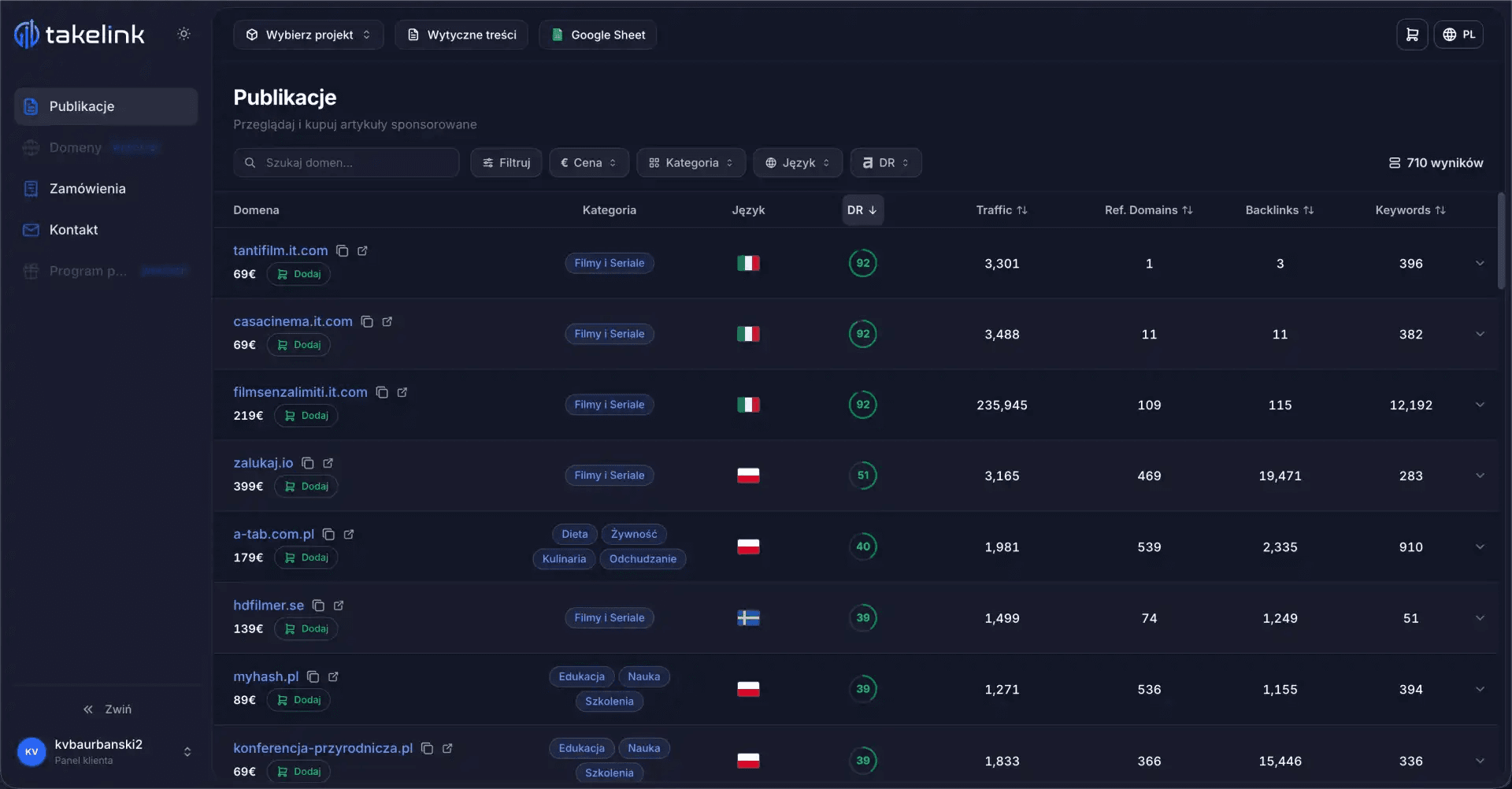
TakeLink platform showing fashion, beauty, and lifestyle portal filters for e-commerce

Portal selection criteria

  1. 01

    Product and buyer profile

    The portal's audience actively uses the relevant category — a generic lifestyle label is not sufficient for every consumer product.

  2. 02

    Decision stage and page type

    Selection queries are directed to category pages; specific variant data, to product pages. Terms and conditions don't substitute for a help centre, and vice versa.

  3. 03

    URL readiness

    We check status, crawlability, canonical, content, products, filters, internal linking, and URL stability before any external publication.

  4. 04

    Data consistency

    The visible name, variant, price, currency, availability, and policies must match the store's structured data and product feed.

  5. 05

    Market, season, and inventory

    Language, shipping coverage, legal requirements, seasonal timing, and stock levels must all be capable of handling the demand the content will drive.

We never select portals based on a single metric alone.

Collaboration paths

Are you building visibility for buyers researching categories, or for those ready to transact?

Buyers first need to identify the right category and selection criteria — then confirm the current state of a specific offer. A single generic guide should not pretend to cover both stages.

Path 01

Category discovery and variant selection

Who it's for
A shopper who knows their need or intended use but hasn't yet identified the right type, size, material, features, or compatible variant.
What you gain
Which criteria drive the selection, how to measure fit, what the filters mean, how variants differ, which features depend on the use case, and when a product from this category won't be the right choice.
Link destination
A stable category or subcategory with a clear definition, filters that match the selection criteria, available variants, a unique description, an internal guide, and clear navigation to product pages.
Materials
Category tree, attribute glossary, variant rules, size or compatibility guides, use-case data, exclusions, customer service FAQs, and business priorities.
Editorial boundary
We don't label a single feature as the best without defining the use case. Criteria must reflect the page's actual filters and inventory, and out-of-stock products cannot be the sole evidence of category coverage.

Sample topics

  • How to choose the right product size without trying it on first?
  • How to compare materials for a specific use case?
  • How to check accessory compatibility before buying online?

Path 02

Purchase, delivery, and post-order support

Who it's for
A buyer who has selected a variant and is now evaluating the seller, total price, delivery timeline, safety, payment options, shipping, withdrawal rights, or how to report a defect.
What you gain
Who sells and manufactures the product, which variant is in the cart, what the total price including shipping is, when and where the store delivers, what warnings apply, how to withdraw from the order, how to report an issue, and the difference between a return and a warranty claim.
Link destination
A product page with a clear variant identifier, live price and availability, safety information, delivery costs and timelines, links to policies, and a working cart — plus a help centre where needed.
Materials
Price and stock feed, SKU or GTIN identifiers, manufacturer and responsible-person details, safety warnings, delivery markets, payment methods, withdrawal and complaint procedures, and update owners.
Editorial boundary
Variable terms are referenced via the live source in the store — we don't freeze them in the publication. We don't oversimplify consumer exceptions, conflate withdrawal rights with warranty claims, or present promotions without the required reference price.

Sample topics

  • How to calculate the total cost of a product including shipping?
  • Where to find safety warnings before buying online?
  • What is the difference between a return and a warranty claim?

Packages

How many links do you need?

Scope is determined by the number of stable categories, target markets, and buyer queries. We factor in seasonality only when the page and inventory can be ready well in advance.

Single Category

10publications

A campaign for one stable category with live filters, in-stock inventory, and supporting selection content.

  • One intent and variant map
  • Page review before publication
  • Topics independent of live pricing

Lower unit cost

Pricing after portal selection

Get a quote
Recommended

Selection & Purchase

20publications

Coverage across multiple categories and pre-purchase queries about total cost, delivery, safety, and post-order support.

  • Two buyer decision paths
  • Consistent information sources
  • Publications across multiple decision stages

Lower unit cost

Pricing after portal selection

Get a quote

Portfolio & Season

30publications

A programme for multiple departments or markets when the store has stable URLs, an update process, and adequate inventory for a planned period.

  • Separate category clusters
  • Content and availability calendar
  • Data review aligned with the campaign

Lower unit cost

Pricing after portal selection

Get a quote

How it works

How we work together

  1. 1

    Send your brief

    Tell us about the site, niche, target market and campaign goal. We'll use that to scope the work.

  2. 2

    Site selection & pricing

    We match sites to your topic, audience and budget, then send a proposal for your approval.

  3. 3

    Content & approval

    You can supply a ready article or ask us to write one — either way you sign it off before we publish.

  4. 4

    Publication & monitoring

    Once approved, we publish and start monitoring indexation.

What's included

What you receive after each publication

We review the landing page and data sources before editorial work begins. Once approved, we publish, report, and monitor indexation.

  • Intent, category, and URL map

    We assign queries to categories, products, guides, and help content. Regulated verticals — such as supplements and CBD — are separated from the main store campaign.
  • Landing page readiness check

    We verify status, canonical, crawlability, category content, variants, filters, stock states, pricing, delivery terms, and next-step actions before selecting a portal.
  • Product data source card

    We record the owner of names, identifiers, attributes, safety data, pricing, availability, and policies — so the article never creates an alternative version of the offer.
  • Content, approval, and indexation monitoring

    We produce or moderate the content; merchandising or legal reviews commercial data. After publication, we deliver the URL and monitor indexation for 12 months.

See if we're the right fit

Send a brief for one client — we'll come back with a portal proposal, role breakdown, and a rough timeline.

Get started

Important for this industry

What we don't link to when the landing page or offer data isn't ready

  • We don't link to category pages with no inventory, pages marked noindex, or product pages that blend group-level attributes with the price and availability of a single SKU.
  • We don't publish a current price, discount code, or shipping deadline without a date, a source, and an update process on the store's side.
  • We don't omit required manufacturer information, GPSR safety warnings, or the reference price when publishing content about a product promotion.
  • We don't treat 'hassle-free returns' as a complete answer — withdrawal rights and warranty claims operate under separate rules and have their own exceptions.

Jak pracujemy

Before we pick a portal, we check four things on the store side

Category, product page, and guide — each page answers a different question

A category page helps users move from a need to a product group — it should clarify selection criteria, filters, and differences. A product page identifies a specific variant, price, availability, and purchase terms. A guide explores a problem but should not compete with the category for the same decision stage. Before any campaign, we assign each intent to one target page type.

Consistent product data across the page view, schema, and feed

Name, SKU or GTIN, variant, price, currency, availability, shipping cost, and returns policy cannot describe conflicting states across the page view, structured data, and feed. No markup fixes an incomplete or contradictory offer.

Variable data stays in the store, not in the external publication

We do not embed a current price, discount code, shipping deadline, or stock level in content unless there is an update process in place. When content references a price reduction, pricing information must comply with promotion display requirements, including the correct reference to the lowest price in the past 30 days.

Retailer disclosure obligations: GPSR and transaction terms

For consumer products covered by GPSR, the online listing should include product identification, manufacturer details, and relevant safety warnings. Delivery, withdrawal rights, complaints, and exceptions each require their own description — a phrase about hassle-free returns is not a substitute for an actual policy.

Fictional e-commerce manager reviewing categories, product variants, and purchase terms
Categories & filtersProduct variantsPrice & availabilityShipping & returns
FAQ

Frequently Asked Questions

Answers on URL selection, categories, variants, promotional pricing, GPSR, returns, seasonality, schema markup, and AI visibility.

To whichever page best matches the query. Selection criteria and comparisons typically fit a stable category page; variant-specific data belongs on the product page. Seasonal or soon-to-be-discontinued products require a URL plan.

Status, crawlability, canonical tag, category definition, product inventory, filters, internal linking, mobile usability, and URL stability. A publication cannot fix a page that is empty or technically excluded from indexing.

We separate group-level data from individual SKU data. Size, colour, material, model, price, and availability must reference a specific variant, and identifiers must remain consistent with the store and the product feed.

Only after confirming the date, scope, reference price, and update process. When promoting a price reduction on a specific product, content must include the required reference to the lowest price in the past 30 days.

For consumer products within its scope, the online listing must display product identification, manufacturer details, and — where applicable — the name of the EU responsible person, along with relevant safety warnings.

A 14-day withdrawal right applies to many consumer contracts concluded online, but statutory exceptions exist and the start date of the period varies. The store's policy must reflect the specific product and the target market.

We work backwards from the peak demand date, accounting for page readiness, inventory, editorial approval, publication, and indexation lead time. If the content would appear after the peak, we choose a more durable topic or plan for the following season.

No. Structured data must match the visible content, and the choice between Product and ProductGroup depends on the page and how variants are structured. Correct markup improves data comprehension but does not guarantee rich result display.

This service covers category architecture and the purchase journey. Supplements, CBD, medical devices, and financial products require additional claim rules and source requirements, so they are handled under separate vertical campaigns.

No. They can make your offer easier to discover and interpret, but outcomes depend on indexation, the store itself, pricing, availability, competition, and the system generating the response.

Last updated: July 2026

Next step

Do you have live categories and accurate product data?

Share your priority URLs, product range, variants, target markets, information margin, and purchase terms. We'll build a topic map without copying your store's product descriptions.

See also

Related