Informational article
What to prepare before selling your property through an agent?
In preparation
We match each topic to a live listing source, the right decision stage, and the page where a reader can take the next step. New-build and secondary market campaigns are planned separately.
48
property portals
281
supporting sites
12 mo.
indexation monitoring
Real Estate
Property portal
Publication topic
How to compare units within a development without losing live data?
Portal database
We don't select portals based on a single metric. We first ask whether the article concerns a new-build listing, a secondary market transaction, or a rental — and whether the client has a live, up-to-date destination page for the link to point to.
48
real estate sites
265
construction & garden sites
2
offer paths
12 mo.
indexation monitoring
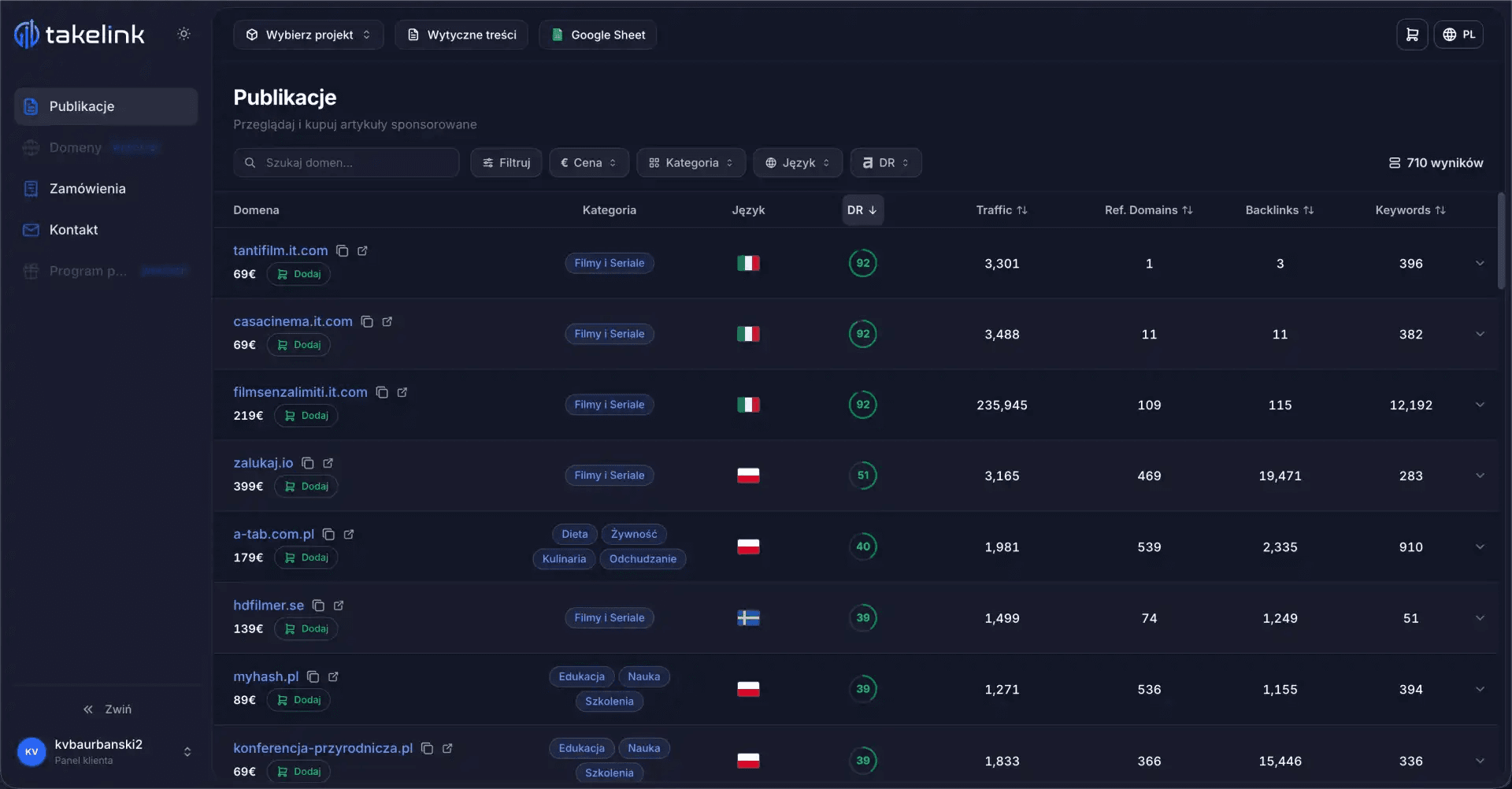
Portal selection criteria
We never select portals based on a single metric alone.
Collaboration paths
A developer manages a continuously changing development listing. An agent or property manager organises information about a specific unit and the process around it. A campaign can cover both areas, but we never merge them into a single generic guide.
Path 01
Sample topics
Path 02
Sample topics
Packages
The number of publications is determined by the number of real customer journeys. We don't create a separate article for every development, city, or unit size if the answer and the destination page are the same.
Single listing path
First series for a specific development or one sales, purchase, or rental service.
Lower unit cost
Pricing after portal selection
Listing and decision journey
Coverage of pre-contact questions and the stages that lead to the live listing or service page.
Lower unit cost
Pricing after portal selection
Development portfolio or multi-market
Plan for multiple developments, cities, transaction segments, or property management services.
Lower unit cost
Pricing after portal selection
How it works
Send your brief
Tell us about the site, niche, target market and campaign goal. We'll use that to scope the work.
Site selection & pricing
We match sites to your topic, audience and budget, then send a proposal for your approval.
Content & approval
You can supply a ready article or ask us to write one — either way you sign it off before we publish.
Publication & monitoring
Once approved, we publish and start monitoring indexation.
What's included
Before any content is written, we establish the data structure, relevant documents, service scope, and who is responsible for updates. After publication we report the URL and monitor indexation.
Send a brief for one client — we'll come back with a portal proposal, role breakdown, and a rough timeline.
Important for this industry
Jak pracujemy
In real estate, a single company communicates data at three distinct levels: the overall development, a specific building or phase, and an individual unit. Investment location and timeline are not the same as price, floor area, or availability of a chosen apartment. Before any content is drafted, we identify who owns each data field and where a reader can verify its current state.
From 2025 onwards, developer disclosure requirements include a dedicated page covering the general prospectus section, prices of offered units, additional services, and a change history. Data is submitted to the national property data portal once a day. A sponsored article explains how to make the right choice and directs readers to the clearly marked source page for current pricing and availability.
Content can explain what information to gather on title, encumbrances, costs, condition, energy performance certificates, or viewing arrangements — but it cannot confirm the legal status or value of a specific property without the relevant documents, and it is not a substitute for a notary, solicitor, surveyor, or inspector.
Phrases like 'excellent transport links', 'quiet area', or 'safe investment' are assessments without a reference point. A useful publication names the landmark, states the distance, specifies the mode of transport, measurement conditions, source, and date. It does not promise capital appreciation or future infrastructure unless stated in a current, citable document.

Answers covering developer pricing, prospectus requirements, unit data, energy performance certificates, local SEO, agency services, and the limits of editorial responsibility.
We work with developers, estate agencies, buying and selling services, lettings brands, and property management firms. New-build and secondary market campaigns receive separate data sources, topic sets, and destination pages.
Development structure, price and availability source, current price list URL, change history, versioned prospectus, specification, timeline, additional services, location materials, and the names of those responsible for data updates.
It can discuss the price structure or state a figure as of a clearly labelled date, provided the client confirms it. For a purchase decision, it should direct readers to the developer's own page showing the current price and change history.
Price and availability can change after an article goes live. A duplicate table quickly becomes a conflicting source. Content should explain the selection criteria and leave live data in one maintained price list.
Yes. We explain its purpose, scope, and how to reach the correct version. We do not replace the document with a summary or pre-select information that requires legal or financial analysis.
We can describe its sections, the official land registry system, and the questions it raises for further verification. An article does not confirm the current status of a specific property and is not a substitute for document analysis or transaction due diligence.
As a document reporting the calculated energy demand of a property, required at the point of sale or letting in defined circumstances. We do not equate certificate ratings with a guaranteed level of future utility bills.
Yes, when a city or district matches the agency's actual service area and has its own data, process, or service page. We do not replicate the same guide by swapping one place name for another.
Real estate covers the listing, sale, purchase, rental, management, and unit-level data. Construction covers design, contracting, building works, materials, and technical sign-off.
No. Live sources, clearly defined data levels, and precise answers may improve how content is evaluated — but they do not guarantee a sale, an enquiry, a search ranking, or inclusion in an AI-generated response.
Last updated: July 2026
Next step
Send us your market type, locations, development structure or agency scope, data sources, and destination pages. We'll build a topic map without copying your property catalogue.
See also